
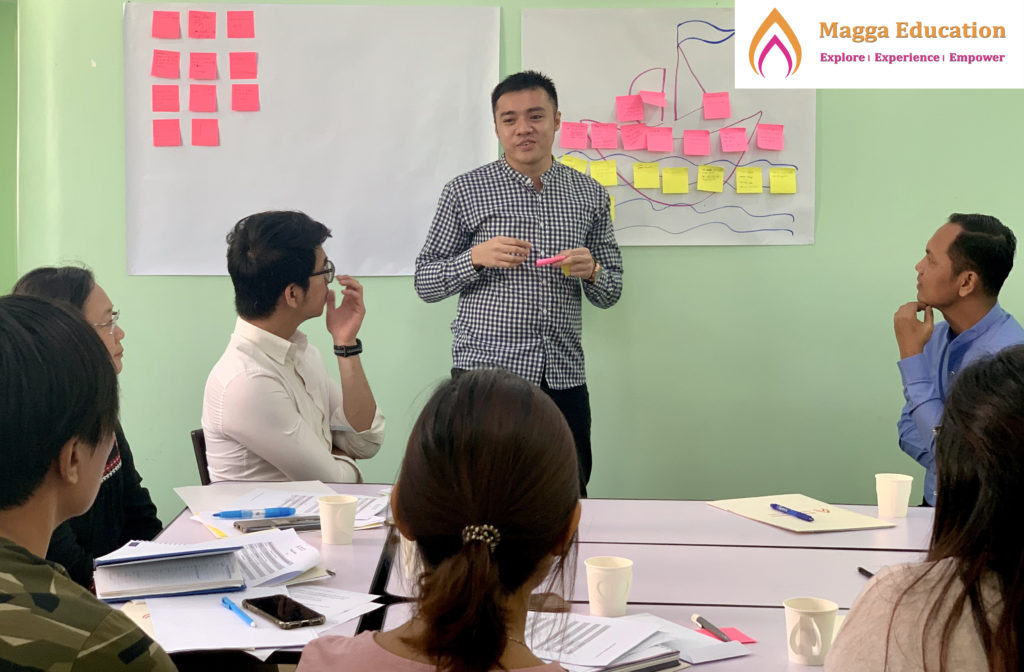
မဂ္ဂပညာရေးရဲ့ ဒုတိယအကြိမ်မြောက် Training Design and Facilitation သင်တန်းကို လွန်ခဲ့တဲ့ စနေနေ့ ဇန်နဝါရီလ (၂၅) ရက်နေ့က စတင်လိုက်ပြီဖြစ်ပါတယ်။ ပထမ (၂) ရက်တွင် သင်တန်းသားများသည် မတူညီတဲ့ လုပ်ဆောင်ချက်များစွာမှာ ပူးပေါင်းပါဝင်ပြီး သင်ယူမှု ပတ်ဝန်းကျင်တစ်ခုကို မည်ကဲ့သို့ အတူတကွ ဖန်တီးနိုင်သလဲဆိုတာကို လေ့လာသင်ယူခွင့်ရခဲ့ပါတယ်။ ပြီးတော့ သူတို့ မည်ကဲ့သို့ သင်တန်းဆရာမျိုးဖြစ်ချင်သလဲ၊ သင်တန်းဆရာတစ်ယောက်ရဲ့ အခန်းကဏ္ဍတွေကဘာတွေလဲဆိုတာကို စဥ်းစားဖော်ထုတ်ပြီး သင်တန်းဆရာကောင်းတစ်ယောက်မှာ ရှိသင့်ရှိထိုက်တဲ့ အရည်အသွေးတွေကိုလဲ ဖော်ထုတ်ခဲ့ပါတယ်။ သင်တန်းသားများသည် သင်ယူမှုဆိုင်ရာ အတွေးအခေါ်တွေ၊ သီအိုရီတွေဖြစ်တဲ့ အရွယ်ရောက်သူများသင်ယူခြင်းတို့ကို လေ့လာပြီး အရွယ်ရောက်သူတွေကို သင်တန်းပေးရာမှာ မည်ကဲ့သို့ ထိရောက်စွာပေးနိုင်သလဲဆိုတာကို လေ့လာခဲ့ကြတာ ဖြစ်ပါတယ်။
သင်တန်း ဒုတိယနေ့မှာတော့ သင်ယူမှုပုံစံ (Learning Styles) တွေကို လေ့လာခဲ့ကြပြီး၊ သူတို့ ဘယ်လိုမျိုးသင်ယူမှုပုံစံတွေကို ပိုအားသာသလဲဆိုတာကို ဆန်းစစ်ခွင့်လဲ ရခဲ့ပါတယ်။ မတူညီတဲ့ သင်ယူမှုပုံစံရှိတဲ့ သင်တန်းသားများကို ဘယ်လိုမျိုး နည်းလမ်းတွေသုံးပြီး သူတို့ရဲ့ သင်ယူမှုကို ပံ့ပိုးပေးနိုင်မလဲဆိုတာလဲ ဆွေးနွေးခဲ့ကြပါတယ်။
လာမယ့်အပတ်တွေကြရင် သင်တန်းသားတွေသည် အတွေ့အကြုံကနေသင်ယူခြင်း နဲ့ အခြားပူးပေါင်းပါဝင်မှုဆိုင်ရာ နည်းလမ်းတွေကို အသုံးပြုပြီး သင်တန်းဒီဇိုင်း (သို့) အလုပ်ရုံဆွေးနွေးပွဲဒီဇိုင်း တစ်ခုကို မည်ကဲ့သို့ ရေးဆွဲနိုင်မလဲဆိုတာကို လေ့လာဆွေးနွေးသွားမှာ ဖြစ်ပါတယ်။
အကယ်၍ ကျွန်ုပ်တို့ရဲ့ ဒီ Training Design and Facilitation သင်တန်းကို တက်ရောက်ဖို့ စိတ်ဝင်စားပါက နောက်ဖွင့်မယ့် အချိန်ဇယားကို မကြာခင်မှာ ကြေညာပေးသွားမှာပါ။ ကျွန်ုပ်တို့ရဲ့ ဒီဖေ့စ်ဘွတ်ခ် စာမျက်နှာ (သို့) ဝက်ဘ်ဆိုဒ် စာမျက်နှာကနေ စောင့်ကြည့်ပေးစေချင်ပါတယ်။ ကျေးဇူးတင်ပါတယ်။
Last Saturday on January 25, Magga started its second batch of Training Design and Facilitation course with diverse participants from different backgrounds. In the first two days, participants learned how to co-create a learning environment by engaging in many activities such as warm-up, norms and environment setting and other participatory approaches. Participants also got a chance to reflect on what kind of trainers they wanted to be and what the roles of trainer/facilitator are. Participants also had an opportunity to explore some of the philosophies of learning including adult learning theory and how to be more effective in training adults.
On the second day, participants learned about different characteristics of learning styles, what their preferences were and different strategies on how to serve all learners. Participants are getting hand-on experiences on these different training skills and they are enjoying what they have learned so far.
In coming weeks, participants will learn how to design a training or workshop by using different kinds of training pedagogies and techniques including experiential learning and other approaches.
If you are interested in attending this course, please keep an eye on our future announcement for the next batch. Thank you!